
Almost everyone has experienced acidity or an upset stomach at some point. But when burning in the chest, stomach pain, vomiting or trouble swallowing keeps coming back, it may be time to investigate the cause. In such cases, doctors may recommend a diagnostic test called endoscopy.
Many people feel nervous when they hear this word. Will it hurt? Is it safe? Do I really need it? This blog answers these questions in simple language and explains what endoscopy is, which symptoms may require it, how the procedure works and when you should seek medical attention. If you are looking for the Best Endoscopy Treatment Hospital in Bhopal, understanding the procedure and the available medical facilities can help you make an informed decision.
What Is Endoscopy?
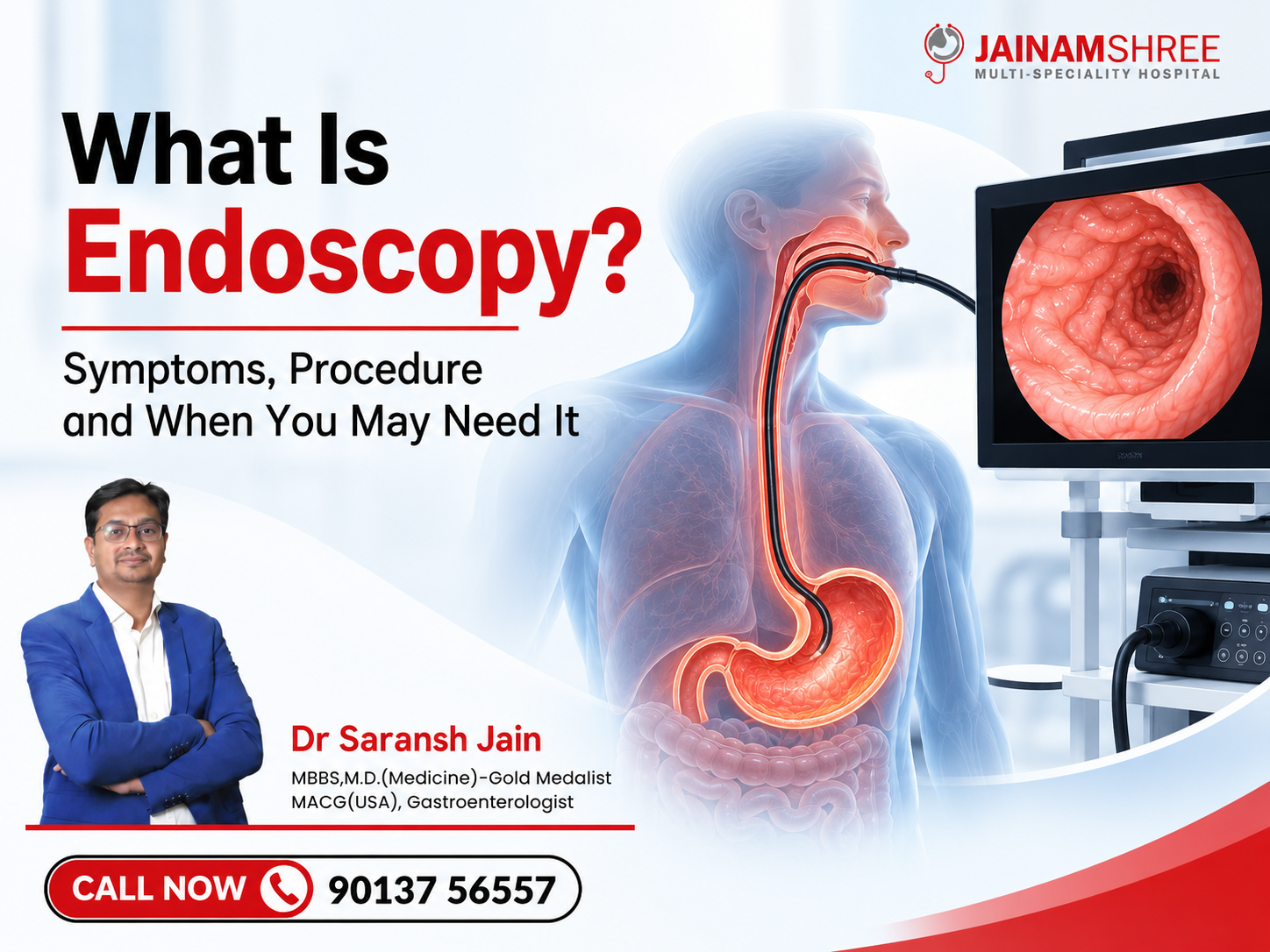
Endoscopy is a medical procedure in which a doctor uses a thin, flexible tube called an endoscope to examine the inside of the body. The tube has a small camera and light at its tip, allowing images to appear on a screen. This helps the doctor examine the lining of the food pipe, stomach and intestines without making an external surgical cut.
The most common type is upper gastrointestinal (GI) endoscopy, also called gastroscopy. It examines the food pipe, stomach and first part of the small intestine. Colonoscopy is another widely used procedure that examines the large intestine.
Endoscopy is useful for both diagnosis and treatment. Through the endoscope, a doctor may collect a small tissue sample for biopsy, control certain types of bleeding, remove polyps or widen a narrowed passage when appropriate.
An experienced Endoscopy Doctor in Bhopal can determine which procedure is suitable based on your symptoms and medical history. A qualified Gastroenterologist in Bhopal is trained to diagnose and manage many digestive system disorders.
Why Is Endoscopy Done?
X-rays and ultrasound scans provide valuable information about internal organs, but endoscopy allows doctors to examine the inner lining of the digestive tract directly.
Doctors may recommend an endoscopy to:
- Investigate persistent stomach pain, acidity or indigestion.
- Detect ulcers, gastritis and damage associated with acid reflux.
- Investigate possible Helicobacter pylori (H. pylori) infection when indicated.
- Identify the source of bleeding in the digestive tract.
- Examine suspicious growths, polyps or possible warning signs of cancer.
- Evaluate selected inflammatory bowel conditions.
- Perform treatments such as removing certain lesions, widening narrowed passages or controlling bleeding.
An Endoscopy Test in Bhopal can help your doctor identify the cause of symptoms and determine the next steps in your treatment.
Symptoms That May Require an Endoscopy Test in Bhopal
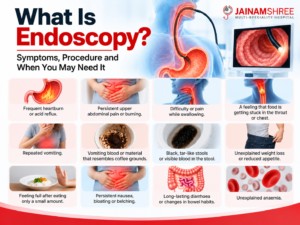
Not every episode of acidity or stomach discomfort requires endoscopy. However, you should consult a medical specialist if you experience any of the following symptoms:
- Frequent heartburn or acid reflux.
- Persistent upper abdominal pain or burning.
- Difficulty or pain while swallowing.
- A feeling that food is getting stuck in the throat or chest.
- Repeated vomiting.
- Vomiting blood or material that resembles coffee grounds.
- Black, tar-like stools or visible blood in the stool.
- Unexplained weight loss or reduced appetite.
- Feeling full after eating only a small amount.
- Persistent nausea, bloating or belching.
- Long-lasting diarrhoea or changes in bowel habits.
- Unexplained anaemia.
Some of these symptoms may indicate a serious medical condition. Vomiting blood, black stools accompanied by weakness, or sudden severe abdominal pain requires urgent medical assessment. Do not rely on self-medication when symptoms persist or worsen.
Types of Endoscopy
Different digestive conditions require different diagnostic procedures. Jainamshree Multispeciality Hospital provides gastroenterology services and advanced endoscopic procedures according to clinical requirements.
1. Upper GI Endoscopy
This procedure examines the food pipe, stomach and the first part of the small intestine. It may help investigate ulcers, gastritis, reflux-related damage, bleeding and swallowing difficulties.
2. Colonoscopy
Colonoscopy examines the large intestine. It may be recommended to investigate rectal bleeding, persistent bowel changes, inflammatory bowel disease or suspected polyps.
3. ERCP
Endoscopic Retrograde Cholangiopancreatography (ERCP) is used to diagnose and treat selected conditions affecting the bile ducts and pancreatic duct, including certain stones and blockages. Learn more about ERCP treatment in Bhopal.
4. Endoscopic Ultrasound (EUS)
EUS combines endoscopy with ultrasound imaging to examine deeper layers of the digestive tract and nearby organs, including the pancreas. Read more about Endoscopic Ultrasound in Bhopal.
5. Third Space Endoscopy
This advanced technique is used for selected digestive conditions involving deeper layers of the gastrointestinal tract. Explore Third Space Endoscopy.
6. Paediatric, Side-Viewing and Double-Balloon Endoscopy
These specialised techniques are used for particular patient groups or areas of the digestive tract that may be difficult to examine with standard endoscopy. Related investigations include oesophageal manometry and 24-hour pH monitoring for selected swallowing and reflux disorders. A FibroScan test can help assess liver stiffness and fatty liver-related changes.
The doctor decides which test is appropriate according to the patient’s symptoms and clinical findings.
Endoscopy Procedure in Bhopal: Step by Step
Understanding the procedure beforehand can reduce anxiety and help you prepare. The exact process depends on whether you are undergoing upper GI endoscopy, colonoscopy or another specialised examination.
Before the Procedure
- Your doctor reviews your symptoms, medical history, allergies and current medicines.
- Inform your doctor if you take blood thinners, diabetes medicines or medicines that affect blood clotting. Do not stop prescribed medicines without medical advice.
- For upper GI endoscopy, fasting is usually required for several hours. Follow the exact instructions provided by your hospital.
- Colonoscopy generally requires bowel preparation to clean the large intestine.
- The doctor explains the procedure, its benefits and possible risks before obtaining your informed consent.
- If sedation is planned, arrange for a family member or responsible adult to accompany you.
During the Procedure
- You are positioned comfortably, usually on your left side for upper GI endoscopy.
- A numbing throat spray may be used, and sedation may be offered depending on the procedure and your medical condition.
- A mouth guard may be placed to protect your teeth.
- The doctor gently guides the endoscope into the digestive tract.
- A small amount of air or carbon dioxide may be introduced to improve visibility.
- You may experience mild pressure, gagging or temporary bloating.
- If necessary, the doctor may collect a biopsy sample or perform an appropriate treatment through the endoscope.
An upper GI endoscopy commonly takes around 10–20 minutes, although the total time varies according to the findings and any additional treatment. Colonoscopy may take longer.
After the Procedure
- You remain in a recovery area until the medical team considers it safe for you to leave.
- A mild sore throat, gas or bloating may occur temporarily.
- You can resume eating and drinking according to your doctor’s instructions.
- If sedation was used, do not drive, operate machinery or make important decisions for the period advised by your medical team.
- Your doctor may explain the initial findings soon after the procedure.
- If a biopsy was taken, the pathology report may take several days or longer.
Seek immediate medical attention if you develop severe or worsening abdominal pain, fever, repeated vomiting, vomiting blood, significant bleeding or black stools after the procedure.
Is Endoscopy Painful or Risky?
Most people tolerate endoscopy well. Throat spray and sedation, when appropriate, can reduce discomfort. Some patients experience temporary gagging, pressure or bloating, but the experience varies from person to person.
Endoscopy is generally considered safe when performed for an appropriate medical reason by a trained team. However, complications can occur. These may include bleeding, a reaction to sedation, infection or, rarely, a tear in the digestive tract.
Your individual risk depends on your health, the type of procedure and whether additional treatment is performed. When selecting the Best Endoscopy Treatment Hospital in Bhopal, check whether the hospital has trained specialists, appropriate monitoring equipment, recovery facilities and emergency support.
Before the procedure, discuss any concerns with your doctor and make sure you understand the preparation instructions and possible risks.
Understanding Your Endoscopy Results
The doctor may explain visible findings shortly after the procedure. These may include inflammation, ulcers, bleeding or polyps. If a biopsy is collected, the sample is sent to a laboratory for further examination. Depending on the results, your treatment plan may involve medication, dietary adjustments, lifestyle changes, additional investigations or a follow-up procedure. A normal endoscopy result can also be useful because it helps rule out certain conditions. Your doctor may then investigate other possible explanations for your symptoms. Remember that endoscopy findings must be interpreted alongside your symptoms, medical history and other test results.
When Should You See a Gastroenterologist in Bhopal?
Consult a Gastroenterologist in Bhopal if digestive symptoms continue for two to three weeks, repeatedly return or interfere with your daily activities. Seek medical advice sooner if you have difficulty swallowing, unexplained weight loss, persistent vomiting, anaemia or blood in your stool.
People with new digestive symptoms at an older age or a family history of gastrointestinal cancers may require an individual assessment to determine whether further investigation is necessary.
Do not wait for a routine appointment if you experience vomiting blood, sudden severe abdominal pain or black, tar-like stools with weakness or dizziness. Seek urgent medical care.
Early assessment can help identify the cause of digestive symptoms and guide appropriate treatment.
How to Choose the Best Endoscopy Treatment Hospital in Bhopal
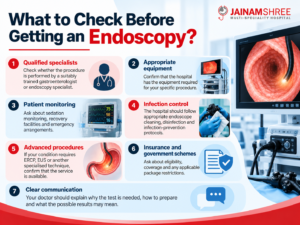
Choosing a hospital involves more than comparing distance or consultation fees. Consider the following factors before making a decision:
- Qualified specialists: Check whether the procedure is performed by a suitably trained gastroenterologist or endoscopy specialist.
- Appropriate equipment: Confirm that the hospital has the equipment required for your specific procedure.
- Patient monitoring: Ask about sedation monitoring, recovery facilities and emergency arrangements.
- Infection control: The hospital should follow appropriate endoscope cleaning, disinfection and infection-prevention protocols.
- Advanced procedures: If your condition requires ERCP, EUS or another specialised technique, confirm that the service is available.
- Insurance and government schemes: Ask about eligibility, coverage and any applicable package restrictions.
- Clear communication: Your doctor should explain why the test is needed, how to prepare and what the possible results may mean.
If you are comparing the Best Endoscopy Treatment Hospital in Bhopal, choose a facility that meets your medical needs and provides transparent information about the procedure, safety measures and follow-up care.
Why Consider Jainamshree Multispeciality Hospital for Endoscopy in Bhopal?
Jainamshree Multispeciality Hospital is located in Arera Colony, Bhopal, and provides gastroenterology consultations and endoscopic services. Patients can discuss their digestive symptoms with the medical team and understand which investigations or treatments may be suitable for their condition.
1. Experienced Gastroenterology Specialists
The hospital’s website lists Dr. Saransh Jain, Director, with an MD in Medicine and a DM in Gastroenterology from AIIMS, New Delhi. His professional profile also describes experience in gastroenterology, hepatology and interventional endoscopy. Dr. R.K. Jain is also listed with a DM in Gastroenterology from AIIMS, New Delhi, and previous academic experience in the Department of Gastroenterology at Gandhi Medical College and Hamidia Hospital, Bhopal. Patients should discuss their specific condition and procedure requirements directly with the treating specialist.
2. Endoscopy and Diagnostic Facilities
Jainamshree Multispeciality Hospital describes its facilities as including a dedicated Endoscopy Unit, modular operation theatres, an ICU, digital X-ray, ultrasonography and a diagnostic laboratory.
Depending on clinical requirements and service availability, patients can discuss upper GI endoscopy, colonoscopy, ERCP, EUS and related investigations with the gastroenterology team.
3. Patient Safety and Emergency Support
The hospital provides critical care and emergency services. Before undergoing endoscopy, patients should discuss sedation requirements, monitoring arrangements and procedure-specific risks with their doctor.
These factors are important when evaluating a hospital for endoscopic diagnosis or treatment.
4. Patient-Centred Care
Clear communication is an important part of the endoscopy process. Patients should receive understandable instructions about fasting, medication adjustments, bowel preparation where applicable, recovery and follow-up.
The hospital’s medical team can explain the expected process and help patients understand their results and treatment options.
5. Insurance and Government Scheme Information
Jainamshree Hospital provides information about CGHS, Ayushman Bharat (PM-JAY) and cashless insurance facilities.
You can review the hospital’s Cashless TPA List. Coverage depends on eligibility, the applicable scheme rules, the procedure and the insurer’s approval. Confirm the details with the hospital before your visit.
6. Convenient Location in Arera Colony
The hospital is located at E-5/47, Arera Colony, near Baghira Apartment, Bhopal. Its location may be convenient for patients travelling from nearby areas, including Shahpura, Shivaji Nagar, Saket Nagar and Trilanga.
For people comparing facilities, the Best Endoscopy Treatment Hospital in Bhopal should be one that provides the appropriate specialist, equipment and support for their particular medical needs.
You can learn more about the hospital’s gastroenterology services, hepatology services, IBS treatment, gallstone surgery and obesity management.
Endoscopy Treatment Near Arera Colony, Shahpura, Shivaji Nagar, Saket Nagar and Trilanga
Jainamshree Multispeciality Hospital is situated at E-5/47, Arera Colony, near Baghira Apartment, Bhopal. Patients from Arera Colony and nearby neighbourhoods can contact the hospital to enquire about gastroenterology consultations and endoscopy services.
Residents of Shahpura, Shivaji Nagar, Saket Nagar and Trilanga can also enquire about appointments and the availability of the procedure they require.
The right choice depends on your symptoms, the specialist’s assessment, the facilities needed and the procedure recommended for your condition.
Frequently Asked Questions About Endoscopy in Bhopal
1. Where can I find the Best Endoscopy Treatment Hospital in Bhopal?
Jainamshree Multispeciality Hospital in Arera Colony provides gastroenterology consultations and endoscopic services. Patients can enquire about upper GI endoscopy, colonoscopy and specialised procedures such as ERCP and EUS. Discuss your condition with the medical team to determine which service is appropriate.
2. Where can I get endoscopy treatment in Arera Colony, Bhopal?
Jainamshree Multispeciality Hospital is located at E-5/47, Arera Colony, near Baghira Apartment. Contact the hospital to confirm appointment availability, preparation instructions, procedure timings and applicable charges before visiting.
3. Can patients from Shahpura, Bhopal, visit Jainamshree Hospital for endoscopy?
Yes. Patients from Shahpura can enquire about gastroenterology consultations and endoscopy services at Jainamshree Multispeciality Hospital in Arera Colony. A specialist can assess their symptoms and advise whether endoscopy or another investigation is required.
4. Which hospital can I consult for endoscopy near Shivaji Nagar, Bhopal?
Patients from Shivaji Nagar can consider contacting Jainamshree Multispeciality Hospital in Arera Colony to enquire about gastroenterology consultations, endoscopy facilities and available appointments. Confirm the required procedure and its availability before travelling.
5. Where can I get endoscopy near Saket Nagar, Bhopal?
Patients living in Saket Nagar can contact Jainamshree Multispeciality Hospital in Arera Colony for information about upper GI endoscopy, colonoscopy and other gastroenterology services. The doctor will recommend the appropriate investigation after reviewing the patient’s symptoms and medical history.
6. Is endoscopy available near Trilanga, Bhopal?
Jainamshree Multispeciality Hospital in Arera Colony provides gastroenterology services. Patients from Trilanga can contact the hospital to confirm whether their required endoscopic procedure is available and learn about preparation, costs and appointment timings.
7. Who should I consult for stomach problems that may require endoscopy?
A qualified gastroenterologist can assess persistent acidity, abdominal pain, swallowing difficulties, suspected ulcers and other digestive symptoms. The specialist will determine whether endoscopy is necessary or whether another test or treatment is more appropriate.
8. How should I prepare for an endoscopy, and how long does it take?
For upper GI endoscopy, fasting is generally required for several hours. Colonoscopy usually involves bowel preparation. Follow your hospital’s exact instructions, especially regarding medicines and diabetes management. An upper GI endoscopy often takes around 10–20 minutes, although preparation and recovery increase the total time spent at the hospital.
9. Can I use Ayushman Bharat, CGHS or insurance for endoscopy in Bhopal?
Coverage depends on the patient’s eligibility, the applicable scheme, the procedure and the insurer’s terms. Jainamshree Hospital provides information about CGHS, Ayushman Bharat (PM-JAY) and cashless insurance facilities. Check the hospital’s Cashless TPA List and confirm coverage before the procedure.
10. What should I consider when choosing an endoscopy hospital in Bhopal?
Look for qualified specialists, suitable endoscopy equipment, infection-control protocols, sedation monitoring, recovery facilities and emergency support. Ask about the procedure’s benefits, risks, preparation requirements, costs and follow-up plan before making your decision.
Final Words: Understanding Endoscopy and Your Digestive Health
Endoscopy is an important diagnostic and therapeutic procedure that helps doctors examine the digestive tract and investigate persistent symptoms. It can identify certain conditions, guide treatment and help doctors decide whether further testing is necessary.
If you experience ongoing acidity, abdominal pain, difficulty swallowing, unexplained weight loss or other persistent digestive problems, consult a qualified gastroenterologist rather than relying on self-medication.
Jainamshree Multispeciality Hospital in Arera Colony, Bhopal, provides gastroenterology consultations and endoscopy-related services. Whether you need an initial assessment, an Endoscopy Test in Bhopal or advice about a specialised procedure, discuss your symptoms and treatment options with the medical team.
Choosing the right hospital involves considering clinical expertise, appropriate facilities, safety protocols and clear communication. Take the first step towards understanding your digestive health by seeking timely medical advice.