
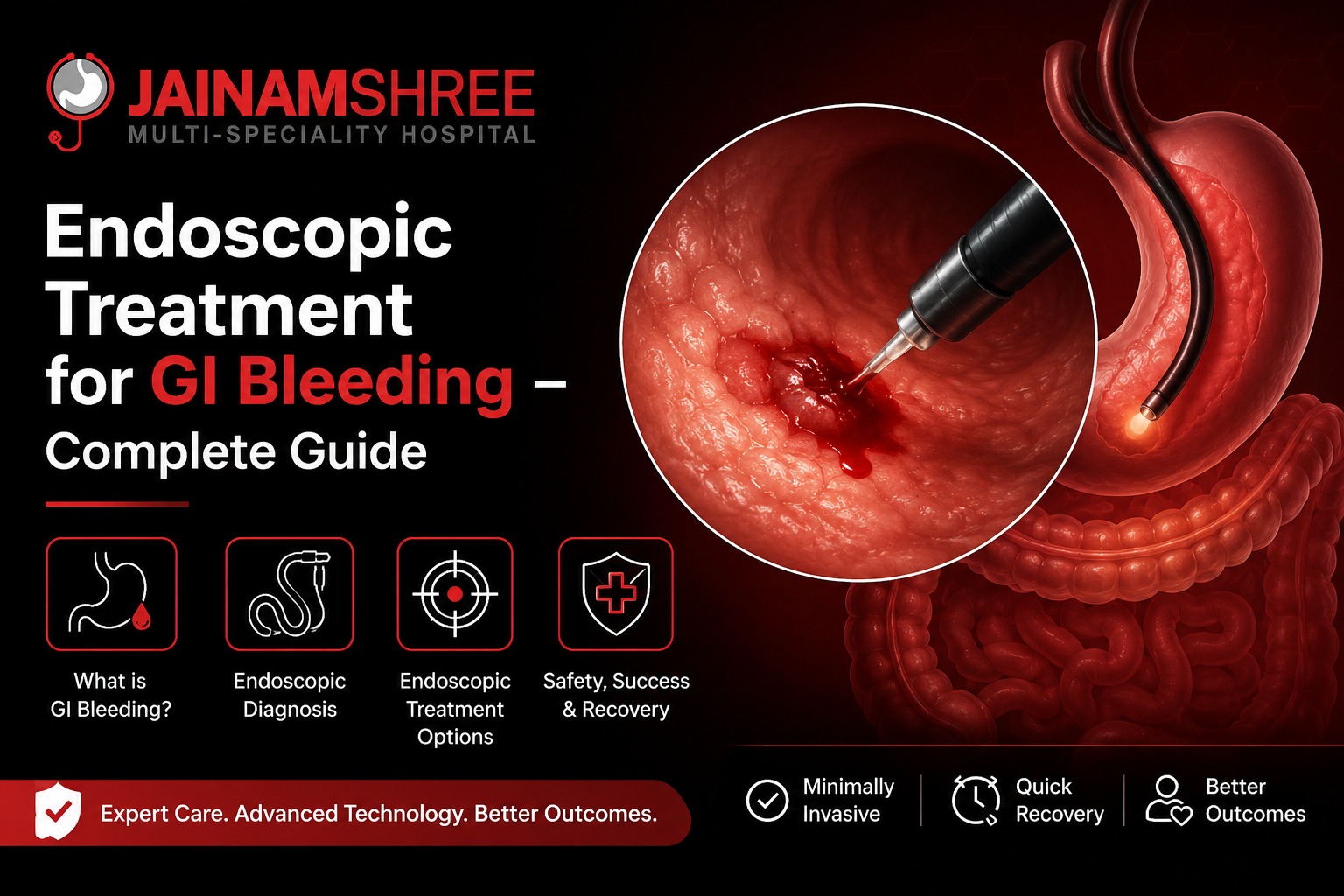
Digestive problems can sometimes become serious if not treated on time. One such condition is GI (Gastrointestinal) bleeding, which means bleeding inside the digestive tract. It may happen in the stomach, intestine, or food pipe.
Many people ignore early warning signs like black stool or vomiting blood. But these symptoms should never be ignored. With modern medical technology, endoscopy for bleeding has become one of the safest and most effective treatments.
In this blog, we will explain everything in simple words so that anyone, even a 15-year-old, can easily understand it.
What is GI Bleeding?
GI bleeding means there is bleeding somewhere in your digestive system. It can be mild or severe depending on the cause.
There are two types:
- Upper GI bleeding – happens in the food pipe, stomach, or upper intestine
- Lower GI bleeding – happens in the lower intestine or colon
If you notice unusual symptoms, it is important to consult a gastroenterologist for GI bleeding without delay.
Symptoms of GI Bleeding
Recognizing the symptoms of GI bleeding early can save your life.
Black or Tarry Stool
This is one of the most common signs of internal bleeding.
Blood in Vomit
Vomiting blood or material that looks like coffee can be a serious sign.
Weakness and Dizziness
Loss of blood can make you feel weak or dizzy.
Stomach Pain
Pain or discomfort in the abdomen can also occur.
Fatigue
You may feel tired all the time due to blood loss.
If you notice any of these symptoms of GI bleeding, you should immediately seek medical help.
Causes of GI Bleeding
Understanding the causes of GI bleeding helps in proper treatment.
Peptic Ulcers
These are sores in the stomach lining that can bleed.
Gastritis
Inflammation of the stomach can lead to bleeding.
Esophageal Varices
Swollen veins in the food pipe can rupture and bleed.
Hemorrhoids
Swollen veins in the rectum can cause bleeding.
Infections or Tumors
Certain infections or growths can also lead to bleeding.
If you are facing these conditions, a gastroenterologist for GI bleeding can guide you properly.
What is Endoscopy for Bleeding?
Endoscopy for bleeding is a medical procedure where a thin flexible tube with a camera is used to see inside your digestive tract.
It helps doctors to:
- Find the exact source of bleeding
- Stop the bleeding immediately
- Avoid major surgery
This method is safe, quick, and highly effective.
How Endoscopic Treatment Works
During the procedure, the doctor uses special tools through the endoscope to stop bleeding.
Injection Therapy
Medicine is injected to stop the bleeding.
Clipping
Small clips are used to close the bleeding vessel.
Heat Therapy
Heat is used to seal the bleeding area.
These techniques make endoscopy for bleeding one of the best treatment options available today.
When Do You Need Endoscopy for Bleeding?
You may need endoscopy for bleeding if you have:
- Vomiting blood
- Black stool
- Continuous weakness
- Severe stomach pain
- Sudden drop in blood pressure
In such cases, immediate medical attention is required.
Benefits of Endoscopy for Bleeding
Quick Diagnosis
Helps identify the problem quickly
Immediate Treatment
Bleeding can be stopped during the same procedure
No Major Surgery
Minimally invasive and safe
Faster Recovery
Patients recover quickly compared to surgery
Because of these benefits, doctors recommend endoscopy for bleeding as the first line of treatment.
Role of a Gastroenterologist for GI Bleeding
A gastroenterologist for GI bleeding is a specialist who treats digestive system disorders.
They help in:
- Diagnosing the problem
- Performing endoscopy
- Providing complete treatment
- Preventing future complications
If you are in areas like MP Nagar, Kolar Road, Arera Colony, or Bawadia Kalan, you can easily access expert care nearby.
Why Choose Jainamshree Multispeciality Hospital?
Jainamshree Multispeciality Hospital is known for advanced digestive care and modern treatment facilities.
The hospital provides:
- Advanced endoscopy services
- Experienced doctors and staff
- Modern ICU and emergency care
- Safe and comfortable environment
If you are looking for endoscopy for bleeding or a trusted gastroenterologist for GI bleeding, this hospital is a reliable choice.
Recovery After Endoscopy
Recovery is usually quick and smooth.
What to Expect
- Mild throat discomfort
- Short rest period
- Resume normal diet as advised
Tips for Recovery
- Follow doctor’s instructions
- Avoid spicy food
- Take medicines on time
Proper care ensures long-term relief.
How to Prevent GI Bleeding
Prevention is always better than cure.
Eat Healthy Food
Avoid junk and spicy food
Avoid Smoking & Alcohol
These damage the digestive system
Take Medicines Carefully
Avoid overuse of painkillers
Manage Stress
Stress affects digestion
These steps can reduce the risk of causes of GI bleeding.
Conclusion
GI bleeding is a serious condition that should never be ignored. Early detection of symptoms of GI bleeding and proper treatment can save lives.
Modern treatment like endoscopy for bleeding makes it easier to diagnose and treat the condition safely.
If you notice any warning signs, do not delay. Consult a gastroenterologist for GI bleeding at Jainamshree Multispeciality Hospital for expert care and treatment.
Informative FAQ
What are the symptoms of GI bleeding?
Common symptoms of GI bleeding include black stool, vomiting blood, weakness, and stomach pain.
What are the causes of GI bleeding?
The main causes of GI bleeding include ulcers, gastritis, infections, and hemorrhoids.
What is endoscopy for bleeding?
Endoscopy for bleeding is a procedure used to detect and stop internal bleeding in the digestive system.
Is endoscopy safe?
Yes, it is a safe and minimally invasive procedure.
When should I see a gastroenterologist for GI bleeding?
You should consult a gastroenterologist for GI bleeding if you notice any serious symptoms.
Where can I get endoscopy for bleeding in Bhopal?
Jainamshree Multispeciality Hospital provides advanced and reliable treatment.